
AI-Powered Phishing Attacks Targeting Small Businesses in 2026
Phishing has always been a problem. You probably already know the basics. A shady email that pretends to be your bank, full of spelling mistakes and clumsy grammar. But that version of phishing is starting to feel almost quaint. In 2026, something has shifted. Artificial intelligence has handed attackers a set of tools so powerful that the old rules for spotting a scam no longer apply. The emails are flawless. The voices on the phone sound exactly like people you trust. The videos could fool your own mother. And small businesses are getting hit the hardest because they rarely have the defenses to catch what now looks completely real. I want to walk you through what these attacks look like, why your business is a prime target, and how to build a defense that works even when the deception is nearly perfect.
The Old Phishing Playbook Is Now Powered by AI
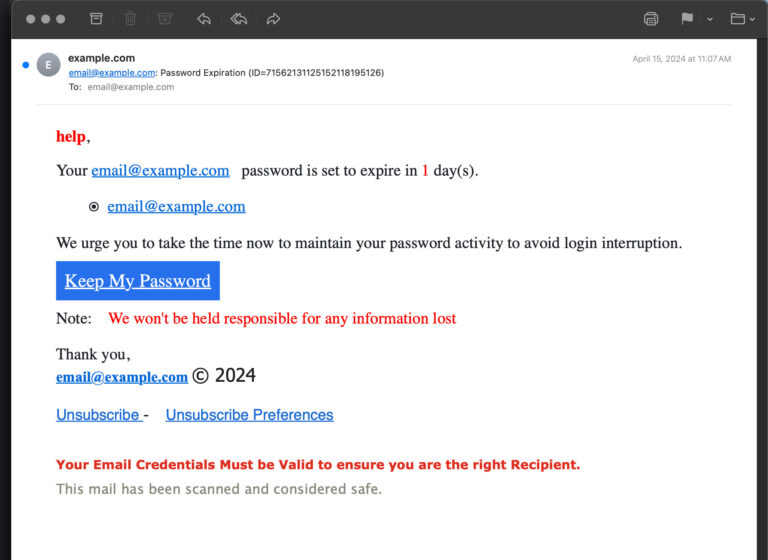
A few years ago, a phishing email was often easy to spot. The grammar was off. The logo was slightly blurry. The greeting was weirdly generic. Security training focused on these red flags, and for a while, it helped. But attackers have been paying attention to the same AI advances that everyone else has. They now use large language models to write emails that read better than what most humans produce. These messages can mimic the writing style of a specific person, picking up on phrases they use, their typical sign-off, even the kind of small talk they make. The result is an email that feels so familiar it does not trigger any alarm bells.
Generative AI also lets attackers scale personalization in a way that was impossible before. They scrape your website, your social media profiles, your team page, and your recent news mentions. Then they feed all that into a model that crafts a message tailored specifically to your business. It might reference a project you just finished, mention an employee by name, or allude to a conference you attended last month. The old mass-blast phishing campaign sprayed a million identical emails and hoped for a few bites. The new campaign sends ten thousand emails, each one slightly different, each one eerily relevant. This makes the attack feel organic, like a normal business communication, because it practically is.
Deepfakes and Voice Clones Are No Longer Science Fiction
The AI threat is not limited to text. In 2026, deepfake audio and video have become affordable and convincing. An attacker can take a short recording of a CEO’s voice, often grabbed from a webinar or a voicemail greeting, and use an AI voice cloning tool to generate new speech. They can then call an employee and impersonate the CEO, asking for an urgent wire transfer or login credentials. The voice on the other end sounds exactly right. The tone, the pacing, the little verbal tics. Everything. It is a visceral, gut-level deception that overrides rational doubt.
Video deepfakes are following close behind. An attacker might schedule a brief video call that appears to come from a trusted vendor. The face on the screen looks like the vendor. The lip movements sync with the words. The background looks like their usual office. The call is short and to the point, a request to update banking details for an upcoming payment. Because the visual and auditory cues match, the brain accepts the interaction as authentic. The technology is not yet perfect, but it is good enough to fool someone who is not looking for the trick. And most small business employees are not looking for the trick because they do not know it is even possible.
Why Small Businesses Are Especially Vulnerable in 2026
The sophistication of AI-powered phishing might suggest that the attackers would focus on enterprises with deep pockets. Instead, they are hunting smaller prey. The reason is brutally practical. Small businesses have valuable data and bank accounts, but they lack the security infrastructure that large corporations maintain. Most do not have a dedicated cybersecurity team or advanced email filtering tuned to catch AI-generated anomalies. Their employees juggle multiple roles, answering emails quickly between customer calls and inventory checks. That fast-paced, under-resourced environment is exactly where hyper-realistic phishing thrives.
Attackers also know that small businesses often operate with a high degree of trust. In a team of ten people, everyone knows everyone. They talk informally. They do things to help each other out. So when a message arrives that sounds exactly like the owner asking for a quick favor, nobody questions it. The social fabric of a small company becomes a vulnerability. An AI-crafted message that captures the owner’s voice, metaphorically or literally, slips right through that fabric. The attackers are not just exploiting technology. They are exploiting the very culture that makes a small business feel like a family.
Automated Reconnaissance Makes Every Business a Target
Before AI, researching a small business for a targeted attack was manual work. Someone had to browse the website, read the about page, and maybe look up employees on LinkedIn. It took time, so attackers saved that effort for high-value targets. AI changes the equation. Automated tools can now crawl a business’s entire digital footprint in seconds, extract key details, identify relationships, and even gauge sentiment from social posts. Then they generate dozens of attack lures, each personalized for a different employee. A single attacker can do in minutes what used to take a team of researchers days. This efficiency means no small business is too obscure to be targeted. If you have a website and a couple of social media profiles, you have enough of a footprint to be worth the bot’s time.
The Emotional Trap of Hyper-Realistic Deception
There is a kind of violation that happens when a phishing email fools you. It feels like a personal failure. You think, I should have caught that. Now imagine that the email you fell for used your boss’s exact phrasing, referenced a private joke, and arrived at a perfectly logical moment in a business deal. The shame is deeper because the deception was so intimate. AI-powered phishing preys on this emotional weight. It weaponizes your trust in familiar communication patterns. The attackers understand that when something feels right, people do not stop to verify. They act. The emotional component is the real payload, and AI is making it more potent than ever.
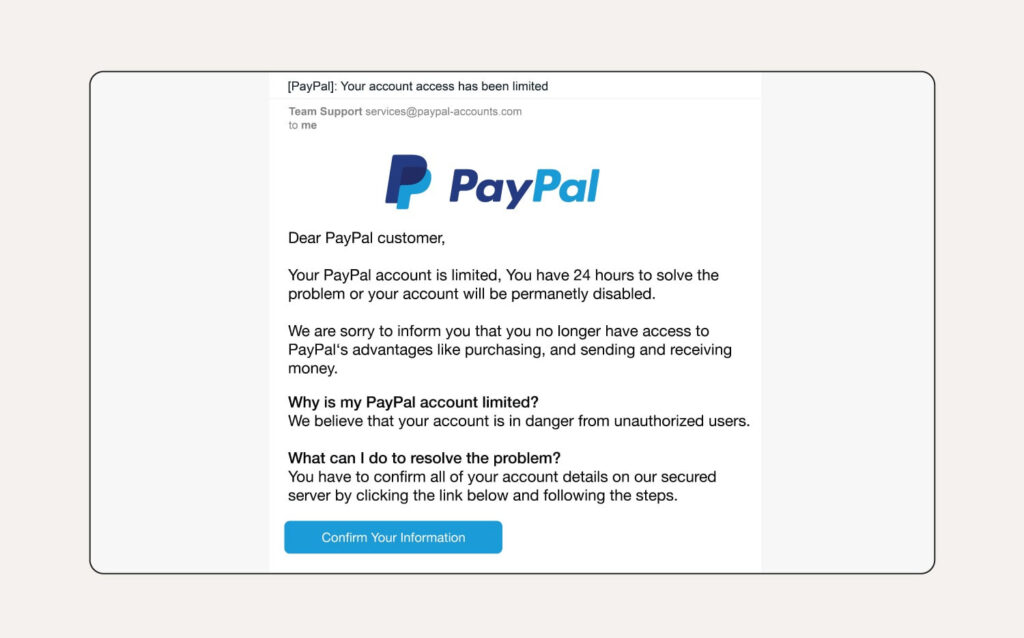
This is why traditional security advice, like look for spelling mistakes or check the sender address, falls short. An AI-generated email has no spelling mistakes. The sender address might be spoofed perfectly or, more cleverly, it might come from a compromised but legitimate account of someone you know. The old red flags are gone. That leaves small business owners and their teams in a vulnerable position, relying on intuition that the new technology is specifically designed to exploit. It is an unfair fight, unless you change the rules of engagement entirely.
Real Scenarios Hitting Small Businesses Today
Let me paint a few pictures of what these attacks look like in practice. These are not hypotheticals. They are drawn from reports and incidents that have already surfaced in 2026. The names and details are changed, but the core events are real. A small marketing agency received an email from their accountant’s address. The email said the accountant had switched banks and provided new wire instructions for an upcoming tax payment. The email was well-written, referenced recent conversations, and attached a voided check image that looked legitimate. The agency owner almost sent the payment but happened to call the accountant about a different question. That phone call saved them forty thousand dollars.
A construction company got a voice call from what sounded exactly like their project manager. He was on a job site, he said, and needed a vendor paid immediately to keep the concrete pour on schedule. The caller ID was spoofed to show his mobile number. The voice had his distinct regional accent and the same hurried energy he always had on site. The accounts payable clerk processed the payment, and the money vanished into an overseas account. The real project manager had no idea it happened until hours later. The voice clone was generated from a few seconds of a video the company had posted on social media celebrating a project milestone.
The Vendor Invoice Scam Gets an AI Makeover
Vendor email compromise is not new, but AI makes it vastly more effective. Attackers break into a vendor’s email, study the communication history, and then use generative AI to draft a payment request that perfectly mimics the vendor’s style. They send it at the exact time a real invoice would normally arrive, referencing the correct project name and dollar amount. The accounts payable person sees an email that looks identical to dozens of others they have processed. They pay it. Only when the real vendor follows up about the overdue invoice does anyone realize what happened. The window for recovery is tiny, and the money is often gone for good.
Building a Defense That AI Cannot Easily Cheat
Faced with deception this polished, you might feel like giving up and hoping for the best. Do not. The same technology that empowers attackers can also empower defenders, but the real secret lies in shifting how your business verifies information. You need to build a defense that does not rely on spotting fakes, because the fakes are getting too good. Instead, you rely on out-of-band verification, technological guardrails, and a culture that treats every sensitive request with a healthy pause.
The single most effective countermeasure against AI-powered phishing is a verification protocol for financial and data requests. Every payment change, every wire transfer, every request for sensitive information must be confirmed through a separate, trusted channel. If the request comes by email, you verify by phone. And not just any phone call. You call a number you already have on file, not one provided in the suspicious message. If the request comes by voice call, you verify by sending a secure message through your internal platform or by calling back on a known number. This breaks the attacker’s illusion. No matter how good the deepfake sounds, a callback to the real person’s known number exposes the scam instantly.
The Power of Phishing-Resistant Multi-Factor Authentication
Passwords are practically irrelevant against AI-driven attacks. They get stolen, guessed, or bypassed. Multi-factor authentication is your safety net, but not all MFA is equal. AI-powered attacks can sometimes intercept SMS codes or trick users into approving push notifications. The strongest form of MFA uses hardware security keys or device-bound passkeys that are tied to the specific website you are logging into. These phishing-resistant methods stop an attacker from using stolen credentials on a fake login page because the key simply will not work on the wrong site. For your most sensitive accounts, like email and banking, hardware keys are the gold standard. They are not expensive, and they neutralize an entire class of AI-enhanced credential theft.
Advanced Email Security That Thinks Like an Attacker
Your email platform’s built-in spam filter is not enough anymore. You need security that uses AI on your side to detect the subtle anomalies in AI-generated phishing emails. Modern email defense services analyze writing style, sentiment patterns, and metadata to spot messages that are statistically abnormal, even if they look perfect to a human. They can detect when an email that claims to be from your CEO was actually composed by a machine learning model. They rewrite links to scan destinations in real time and quarantine attachments for sandbox analysis. These services cost a few dollars per user per month and are designed for small businesses. The investment is trivial compared to a single successful phishing loss.
Training Your Team for a World Without Obvious Red Flags
Security awareness training has to evolve. Telling employees to look for bad grammar is useless now. Instead, train your team to recognize the new patterns. Teach them about AI voice cloning and deepfake video. Show them real examples, if you can get them, or use simulated AI-generated phishing emails in your training platform. The goal is to make them aware that technology can now perfectly impersonate people they trust. That awareness alone primes them to pause and verify, even when everything feels right.
Build verification reflexes into your daily operations. Create simple scripts for common situations. If someone asks for a payment change by email, the rule is to call the person at a saved number before acting. If someone calls claiming to be the boss and demands an urgent transfer, the rule is to text the boss separately or use a code word. These rules must be non-negotiable and modeled from the top. The owner has to follow them too, without exception. When the owner cheerfully accepts a verification callback, it signals to everyone that this is how we do things, not that I do not trust you. It reframes verification as a mark of professionalism, not suspicion.
Creating a Safe Space for Second-Guessing
The culture of your business is a security control. If an employee feels rushed or afraid to delay a request, they will bypass your protocols. Make it explicitly okay to slow down. Tell your team that no payment is so urgent that it cannot wait five minutes for verification. Publicly thank people who catch suspicious requests, even if they turned out to be legitimate. The moment someone is punished or mocked for a false alarm, you lose the vigilance of your entire team. Celebrate the pause. It is the pause that stops the deepfake, the clone, and the perfectly crafted email. In a world of AI deception, the pause is your superpower.
Technology That Shields You Without Constant Management
Some protective measures run quietly in the background and require almost no maintenance. Setting up email authentication for your domain is one of them. SPF, DKIM, and DMARC are technical protocols that tell email receivers how to verify that a message truly came from you. When properly configured, they prevent attackers from sending phishing emails that appear to come from your domain. This protects your clients and partners from being targeted with AI-generated messages that seem to be from your company. It is one of the most responsible things you can do, and your domain provider or email host has step-by-step instructions. You set it once and update it occasionally.
Another background shield is browser isolation technology. Some security services can open links in a remote, secure container so that even if an employee clicks a malicious link, the malware never touches their device. This is particularly valuable against AI-crafted phishing links that lead to highly convincing fake login pages. The isolation container renders the page visually but prevents any code from executing locally. It effectively neutralizes the click. For small businesses, this kind of protection often comes bundled with advanced email security packages, making it accessible without a dedicated IT team.
What to Do the Moment You Suspect an AI Attack
Your response to a potential AI-powered phishing incident must be fast and structured. The first step is to assume the worst and act immediately. Disconnect the affected device from the network. Do not turn it off, because you might need the memory for forensic analysis. Change passwords for any accounts that might have been compromised, starting with email and financial platforms. Force a logout on all active sessions. Check for email forwarding rules that attackers often set up to monitor your communications even after a password change. Remove them.
Contact your bank or payment processor right away if any financial transfer might have been initiated. Time is critical here. A rapid notification can sometimes stop a wire before it leaves the system. Then engage a forensic expert to understand how the attack happened, especially if AI-generated content was involved. This investigation can reveal whether the attacker still has access and what data they might have exfiltrated. Document everything. If you have cyber insurance, notify your carrier. They often provide breach coaches and legal support. Your documented response plan, kept updated and accessible, will guide you through the first chaotic hours.
After the immediate crisis is contained, hold a calm debrief with your team. The goal is learning, not blame. Walk through the timeline. Identify which safeguards worked and which failed. Update your training and your policies based on what you discovered. Every incident, painful as it is, makes your defenses stronger for the next attempt. And there will be a next attempt. The attackers are persistent. But so are you.
Conclusion
AI-powered phishing attacks are not a distant threat on the horizon. They are here in 2026, and small businesses are squarely in the crosshairs. The tools that make these attacks so dangerous are the same tools that have made communication faster and more personal everywhere else. Generative AI writes emails that sound exactly like your colleagues. Voice cloning mimics the people you trust most. Deepfake video blurs the line between real and fake until it is almost invisible. The old advice about spotting bad grammar does not work anymore because the grammar is flawless and the personalization is uncanny.
But you are not helpless. The defense against AI deception is not about being smarter than the machine. It is about building human habits and technical guardrails that work regardless of how convincing the fake is. Establish verification protocols that always use a separate channel. Deploy phishing-resistant multi-factor authentication. Invest in AI-driven email security that fights fire with fire. Train your team to pause, to verify, to value caution over speed. Make your culture one where questioning a strange request is celebrated. None of these steps require a fortune or a computer science degree. They require attention, consistency, and a clear-eyed understanding of the new reality. The phishers have upgraded their toolkit. It is time we upgraded ours too. Your business, your team, and your peace of mind are worth that effort.